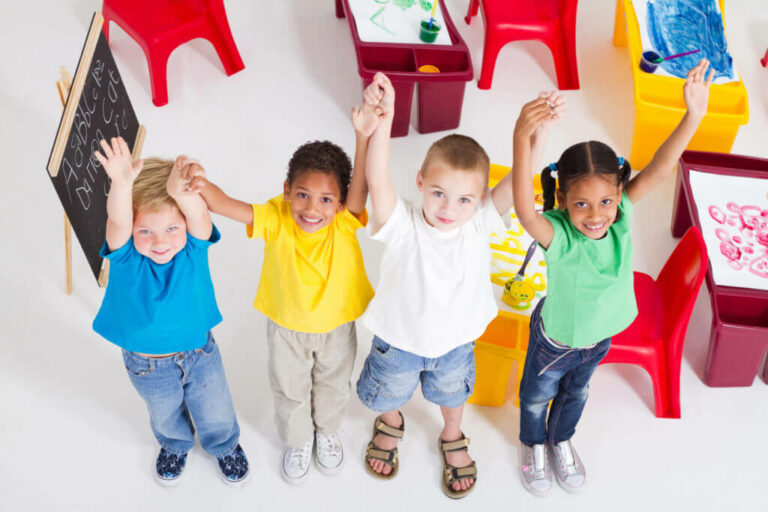
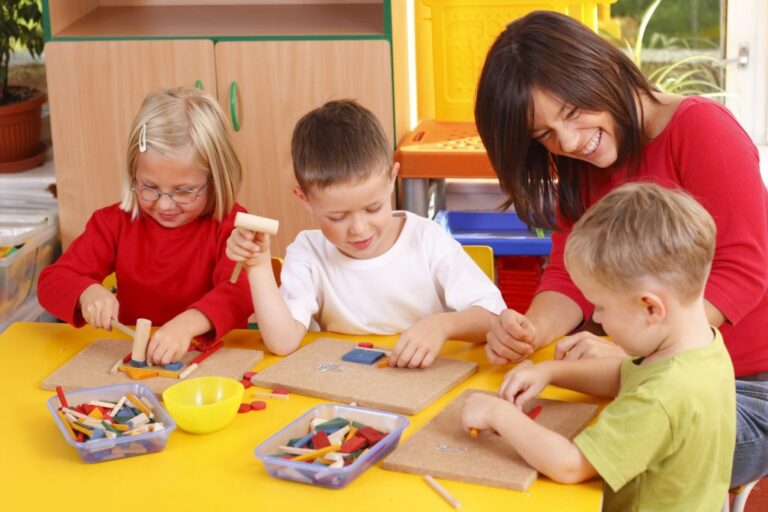
Social skills are important in early childhood education because they help young children communicate, cooperate, manage emotions, solve conflicts, build friendships, and participate successfully in a classroom. For preschoolers in McKinney, TX, developing skills such as sharing, taking turns, empathy, listening, and self-regulation creates a foundation for both kindergarten readiness and long-term learning.
At Heritage Learning Center, social development is an important part of helping children grow into confident, capable learners. Family-owned and operated in McKinney since 1987, Heritage provides age-appropriate preschool experiences that combine academics with opportunities to communicate, cooperate, play, and form positive relationships. Children learn social skills through everyday experiences, from sharing classroom materials to participating in group activities and solving disagreements with friends. With experienced educators, research-based curricula, play-based learning, and a nurturing environment, Heritage Learning Center helps children develop the social, emotional, and academic skills they need for their next stage of development.
How Social-Emotional Development Helps Prepare Children for School
Social-emotional development supports a child’s ability to learn because preschoolers need more than academic knowledge to succeed in a classroom. They also need to listen, participate in groups, communicate needs, handle frustration, and interact appropriately with other children.
The National Association for the Education of Young Children (NAEYC) notes that children with strong social and emotional health tend to show greater motivation to learn, participate more eagerly in classroom activities, and demonstrate stronger academic performance. These abilities help children focus their attention on learning rather than spending all of their energy navigating social situations.
What Social Skills Should Preschoolers Be Learning?
Preschoolers should gradually develop the ability to communicate with others, cooperate during play, recognize emotions, and handle common social situations with increasing independence.
Important early childhood social skills include:
- Sharing and taking turns: Children learn that toys, materials, and activities can be enjoyed cooperatively.
- Listening: Paying attention to teachers and peers helps children follow directions and participate in conversations.
- Expressing feelings: Learning words for emotions gives children alternatives to hitting, grabbing, yelling, or withdrawing.
- Empathy: Children begin recognizing when someone else is sad, hurt, excited, or frustrated.
- Problem-solving: Everyday disagreements provide opportunities to practice finding solutions.
- Self-regulation: Children gradually learn to wait, manage frustration, and adjust their behavior to different situations.
- Friendship skills: Inviting others to play, cooperating, and showing kindness help children form relationships.
These abilities are genuine developmental milestones. The Centers for Disease Control and Prevention lists behaviors such as asking to play with other children, comforting someone who is hurt or sad, enjoying being a helper, and changing behavior based on the setting among social-emotional milestones commonly seen by age four.
How Does Preschool Help Children Build Social Skills?
Preschool gives children repeated, supervised opportunities to practice social skills with peers and caring adults. Social development does not happen through a single lesson. It grows through hundreds of everyday interactions.
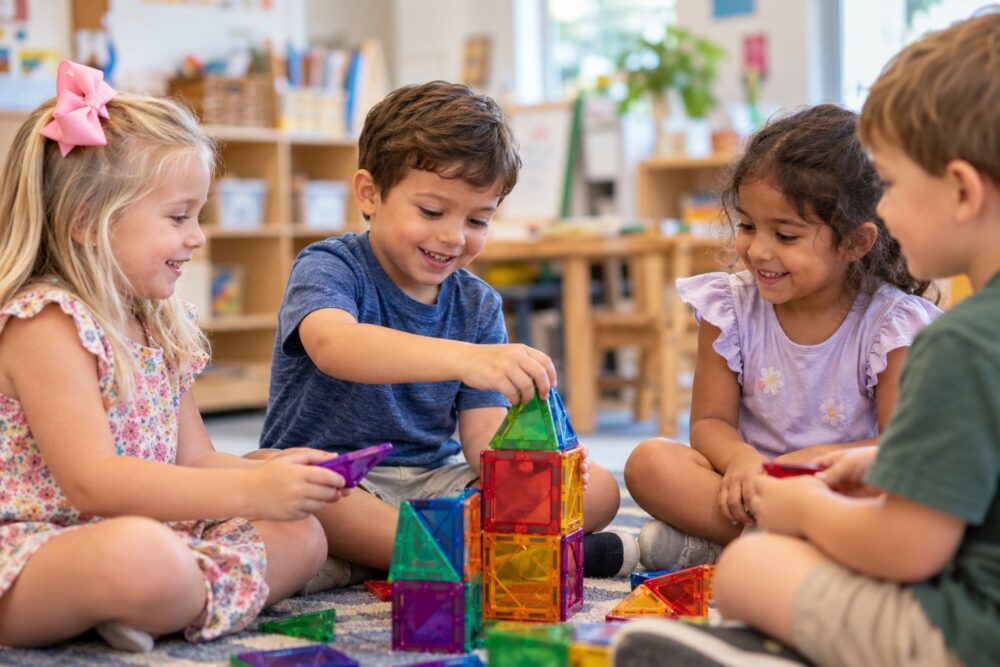
A child building a block tower with a friend may practice sharing materials and communicating ideas. A disagreement about a favorite toy becomes an opportunity to practice taking turns. Group activities encourage listening and cooperation, while pretend play allows children to experiment with different roles, emotions, and perspectives.
Teachers play an important role by modeling respectful communication and guiding children when they need help. Harvard University’s Center on the Developing Child explains that responsive, back-and-forth interactions with caring adults support early language and social skills while helping shape developing brain architecture.
At Heritage Learning Center, these opportunities are incorporated throughout age-appropriate preschool programs. For example, Early Preschool places an emphasis on sharing, taking turns, expressing feelings with words, and showing kindness. As children progress into Preschool and Pre-K, they continue developing independence, communication, adaptability, and confidence alongside literacy, math, and other academic skills.
Why Do Social Skills Matter for Kindergarten Readiness?
Strong social skills help children adjust to the expectations of kindergarten. A child entering elementary school will be expected to function as part of a group, follow routines, communicate with adults and peers, and recover from everyday frustrations.
Social readiness can help children:
- Join classroom activities more confidently
- Ask teachers for help when needed
- Work and play cooperatively with classmates
- Follow routines and transitions
- Use words to resolve disagreements
- Wait for turns and manage impulses
- Develop positive relationships with teachers and peers
Academic preparation still matters, but early education is about developing the whole child. A preschooler who knows letters and numbers but struggles significantly with group participation or communication may face different challenges than a child who is also developing the social skills needed to learn alongside others.
How Can McKinney Parents Encourage Social Skills Outside Preschool?
Parents can strengthen social development by giving children opportunities to interact with others and practice age-appropriate independence.
The CDC specifically encourages parents of four-year-olds to let children play with other children and recommends settings such as parks, libraries, playgroups, and preschool programs. Parents can also model language such as, “Can I have a turn?” and give children time to work through minor disagreements before stepping in.
McKinney families have plenty of opportunities to extend these lessons into everyday life. The city maintains more than 70 miles of trails, along with parks and recreational facilities where children can experience shared spaces, group play, and new social situations. McKinney is also a rapidly growing community, with the City reporting a population of 237,130 as of January 1, 2026.
Parents can reinforce social learning anywhere by encouraging children to greet others, wait their turn, order politely at a restaurant, participate in a library activity, or cooperate with another child at the playground. Small experiences provide valuable practice.
Frequently Asked Questions About Social Skills in Early Childhood
At what age do children start developing social skills?
Social development begins from infancy through responsive interactions with caregivers. During the toddler and preschool years, children increasingly practice peer interaction, sharing, cooperation, emotional expression, empathy, and friendship skills.
What are examples of good social skills for a 4-year-old?
The CDC identifies behaviors such as seeking out other children for play, comforting someone who is sad or hurt, enjoying being a helper, and adjusting behavior to different settings as common social-emotional milestones by age four. Development varies from child to child, so milestones should be viewed as developmental guides rather than a competition.
Can preschool help a shy child become more social?
Preschool can give shy children consistent, low-pressure opportunities to become comfortable with teachers and peers. Predictable routines, small-group activities, play, and supportive guidance can help children gradually gain confidence interacting with others.
Are social skills as important as academics in preschool?
Yes. Social-emotional abilities support children’s capacity to participate in learning, follow directions, communicate, cooperate, and build positive relationships. NAEYC notes that children’s social and emotional health affects their overall development and learning.
Help Your Child Build Skills for School and Life
Learning to read, count, and write is important, but so is learning how to be a friend, express a feeling, solve a problem, and work with others. When preschool gives children opportunities to develop both academic and social skills, they can enter their next classroom with a stronger foundation for learning.
Heritage Learning Center provides McKinney families with a loving, engaging environment where children can build confidence, friendships, independence, and essential early learning skills.
Ready to help your child build the social and academic skills they need for kindergarten and beyond? Contact Heritage Learning Center to schedule a tour and learn more about our preschool programs.