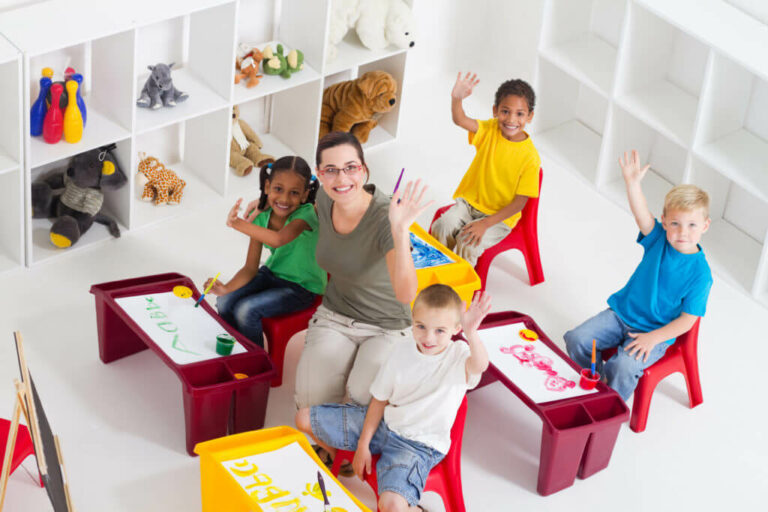
Your child may be ready for preschool if they show growing independence, communicate basic needs, show interest in other children, follow simple directions, handle short separations from caregivers, and participate in basic routines. Preschool readiness is not about mastering letters or numbers first. Social, emotional, communication, and self-help skills are often more useful signs that a child is prepared for a classroom environment.
At Heritage Learning Center, we know that deciding when to start preschool can feel like a major milestone for McKinney families. Since 1987, Heritage Learning Center has helped children build the skills and confidence they need for future learning. Our preschool programs serve children beginning at 18 months, with age-appropriate classrooms that encourage language development, independence, social skills, early literacy, and hands-on learning. Rather than expecting every child to reach milestones at exactly the same time, our experienced educators provide a nurturing environment where children can learn, explore, and grow at their own pace.
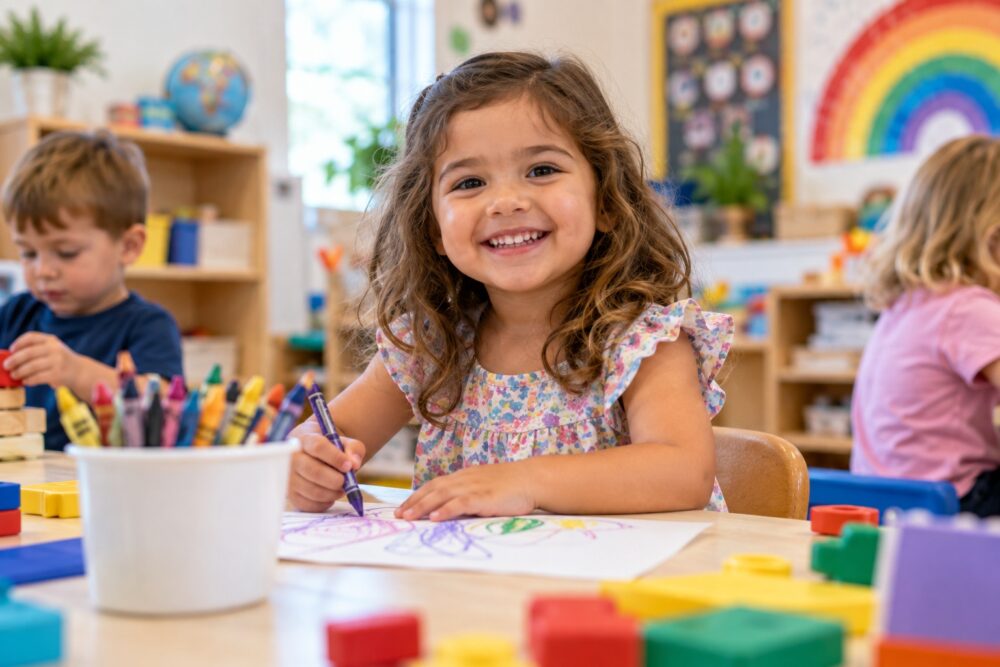
Preschool Readiness Signs Parents Should Look For
Preschool readiness is best viewed as a collection of developing skills rather than a checklist a child must complete perfectly. The American Academy of Pediatrics emphasizes that readiness involves more than academics. Social-emotional abilities, communication, physical well-being, self-regulation, language, and cognitive development all contribute to a child’s ability to learn in a group environment.
1. Can Your Child Separate From You for Short Periods?
A child does not need to say goodbye without any tears to be ready for preschool. Some separation anxiety is normal, especially when a classroom is new.
Instead, look for signs that your child can eventually settle with another trusted adult. The CDC lists calming down within about 10 minutes after a caregiver leaves as one developmental milestone commonly seen by age 3.
Parents can help prepare for preschool by practicing brief, predictable separations. When school begins, creating a consistent goodbye routine can also help your child understand that you leave and come back.
2. Does Your Child Show Interest in Other Children?
An interest in peers is another useful sign of preschool readiness. Your child does not have to be an expert at sharing or taking turns before the first day.
Around age 3, many children begin noticing other children and joining them in play. The American Academy of Pediatrics also notes that preschool-age children gradually become better at cooperating, sharing, taking turns, and developing friendships.
Preschool gives children regular opportunities to practice these skills. In other words, social skills are not simply prerequisites for preschool. They are also skills children develop through preschool.
3. Can Your Child Communicate Basic Needs?
Children benefit from being able to communicate simple wants, needs, and feelings to teachers. That might include saying they are hungry, asking for help, telling someone they need the bathroom, or explaining that something is bothering them.
By age 3, CDC milestones include having short back-and-forth conversations, asking basic questions, stating a first name when asked, and speaking clearly enough for others to understand most of the time.
Do not worry if your child’s vocabulary or pronunciation is not exactly like another child’s. Development varies. What matters for preschool readiness is that communication skills are developing and your child is increasingly able to interact with adults and peers.
4. Is Your Child Becoming More Independent?
Growing independence is one of the clearest signs that a child may be ready for a preschool routine. Simple skills such as helping get dressed, washing hands with guidance, putting away toys, eating with utensils, or managing belongings help children participate confidently in the classroom.
The CDC notes that children between ages 3 and 5 become increasingly independent, and recommends giving preschoolers opportunities to help with simple chores and make limited choices.
You can encourage independence at home with simple routines:
- Let your child put toys away after playtime.
- Practice washing and drying hands.
- Encourage them to try dressing before stepping in to help.
- Give simple responsibilities, such as carrying a backpack.
- Practice sitting for a short story or activity.
Perfection is not the goal. A willingness to try is an important part of learning independence.
5. Can Your Child Follow Simple Directions and Routines?
Preschool classrooms involve transitions throughout the day, such as moving from playtime to storytime, cleaning up, eating snacks, and going outside.
A child who can understand simple instructions and is beginning to follow familiar routines has a helpful foundation for preschool. The CDC suggests giving 3-year-olds simple two-step or three-step directions at home, while also emphasizing reading, conversation, counting games, and participation in everyday tasks.
Parents can practice by creating predictable routines around meals, bedtime, getting dressed, and cleanup. These everyday experiences help children understand what it means to complete one activity and move on to the next.
How Can McKinney Parents Help Their Child Prepare for Preschool?
The best preparation combines independence, conversation, play, books, and opportunities to spend time around other children.
McKinney families can use local community resources to make these experiences fun. McKinney Public Library supports early childhood education and offers programming for young children. Its 2026 programming has included activities such as Little Explorers for ages 3 to 5, family storytimes, nature walk storytimes, and cultural storytimes. Activities like these can give children additional opportunities to listen, explore, interact with peers, and become comfortable participating in a group.
At home, keep preparation low-pressure. Read together every day, encourage pretend play, let your child make simple choices, and talk about what preschool will be like. According to the CDC, reading, conversation, play with other children, and simple responsibilities can all support development during the preschool years.
Heritage Learning Center also offers age-specific programs designed to build these abilities gradually. Children progress from foundational listening, social, and routine skills toward greater independence, fine motor development, early literacy, math concepts, and kindergarten preparation.
Frequently Asked Questions About Preschool Readiness
What age should my child start preschool?
There is no single perfect age for every child. Heritage Learning Center offers preschool programs beginning at 18 months, with classrooms designed around children’s developmental stages and age-specific learning needs.
Does my child need to know the alphabet before preschool?
No. Academic mastery is not required before preschool. Early childhood programs are designed to help children develop literacy, language, cognitive, social, and classroom skills over time.
Does my child need to be fully independent before starting preschool?
No. Independence develops gradually. Being willing to attempt age-appropriate tasks, communicate needs, and participate in routines can be more meaningful than being able to do everything without help.
What if my child is shy or cries at drop-off?
Shyness or tears do not automatically mean a child is not ready. Children adjust to separation at different rates, and consistent routines, brief goodbyes, and supportive teachers can help make the transition easier.
Ready to Explore Preschool in McKinney, TX?
If you’re seeing these signs of preschool readiness, it may be time to explore what the next step could look like for your child. Heritage Learning Center provides a loving, engaging environment where McKinney children can strengthen their independence, build friendships, explore new ideas, and develop a foundation for future learning.
Ready to see whether Heritage Learning Center is the right fit for your child? Contact Heritage Learning Center to schedule a tour and learn more about our McKinney preschool programs.